Mechanic time capture application.
Daveytime Shop is an online application designed for shop mechanics to monitor the time spent on each piece of equipment through specific work orders. This application enables employees to eliminate the need for paper-based time tracking, thereby enhancing efficiency. The primary objective of this application is to facilitate minute-by-minute compensation for employees and to ensure precise billing for the hours dedicated to the equipment.
The Challenge
Employees
- The employee records equipment hours using a paper timesheet.
- The use of paper timesheets consumes a considerable amount of employee time at the end of the workday.
- Employee estimates the time spent on each piece of equipment. Has to manually count the hours at the end of the day.
- Prefers not to document detailed information when working with various pieces of equipment.
Managers
- Monitoring employee activities on equipment throughout the day can be quite challenging.
- The estimation of work hours on equipment complicates the accurate billing of time to clients.
- The employee's handwriting was difficult to decipher, necessitating communication with the employee to clarify the activity notes.
- Adding employee hours from a paper timesheet to a payroll program takes several hours at the end of the week.
Research
I begin my research by visiting various shops to understand the daily routines of both employees and managers. The primary issue raised by the employee was the requirement to complete the timesheet on paper. Workers expressed their frustration about the time-consuming nature of this task. Additionally, the timesheet included activity codes that were irrelevant to the shops, making the selection process confusing at times. Moreover, greasy or dirty hands often led to smudges on the timesheet, forcing employees to re-enter all their information onto a new sheet.
Adding timesheet hours into SAP for payroll for processing was a huge challenge for managers, taking up the bulk of their time on Fridays at the end of the week. Handwritten timesheets were often difficult to read, and they had to consult with employees to interpret them. Managers also found it difficult to adjust their hours once they had submitted them to payroll since the payroll department required justification and documentation for any changes.
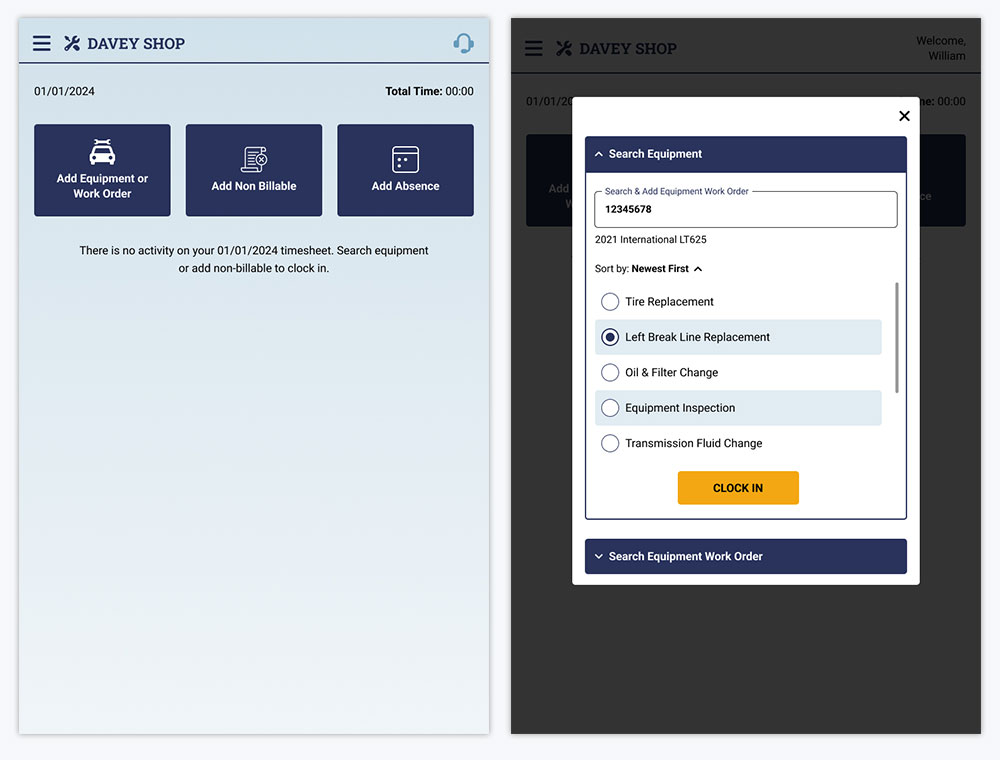
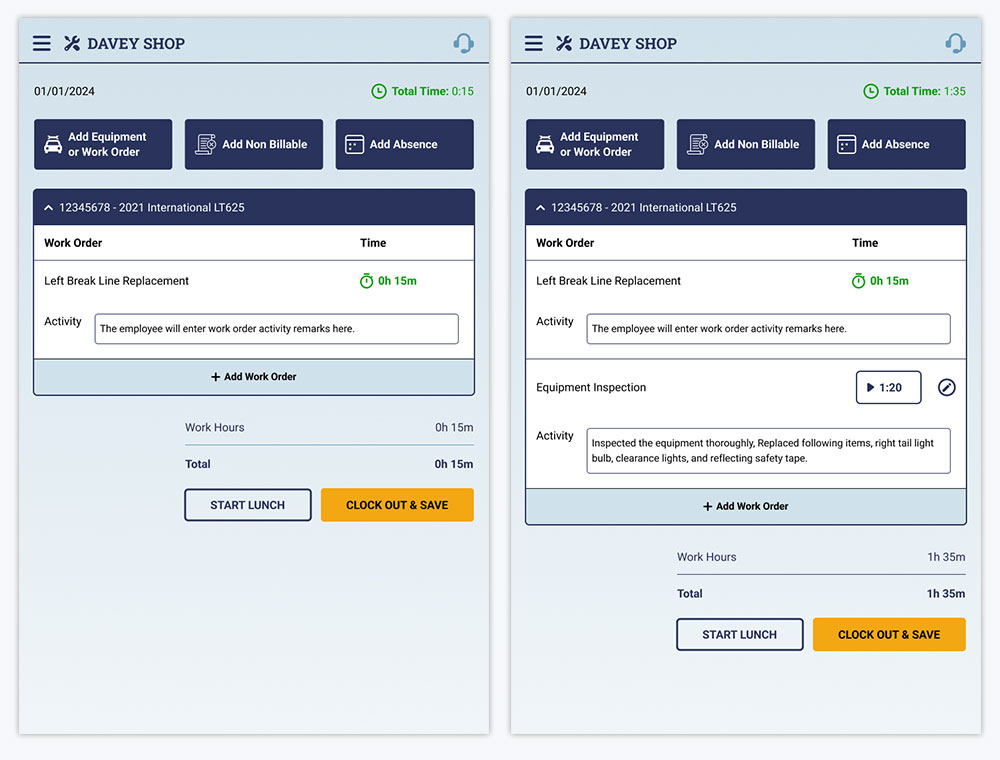
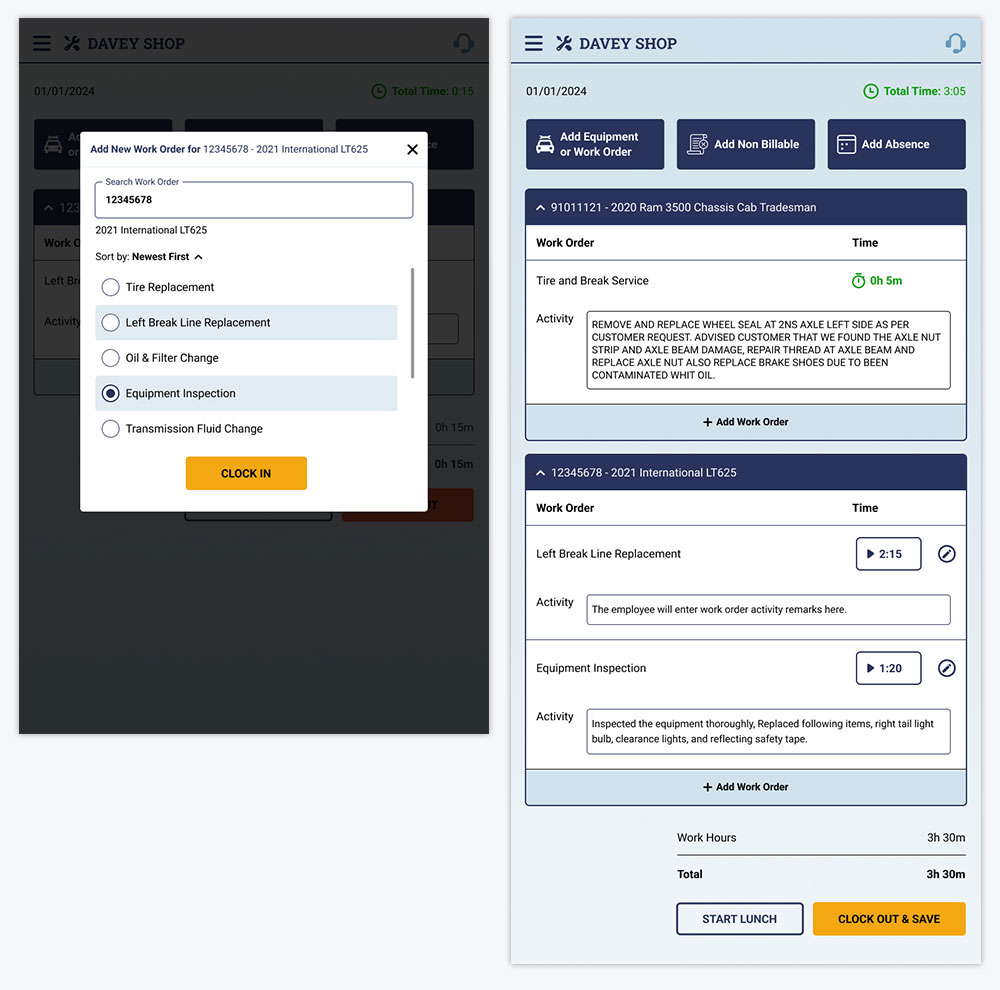
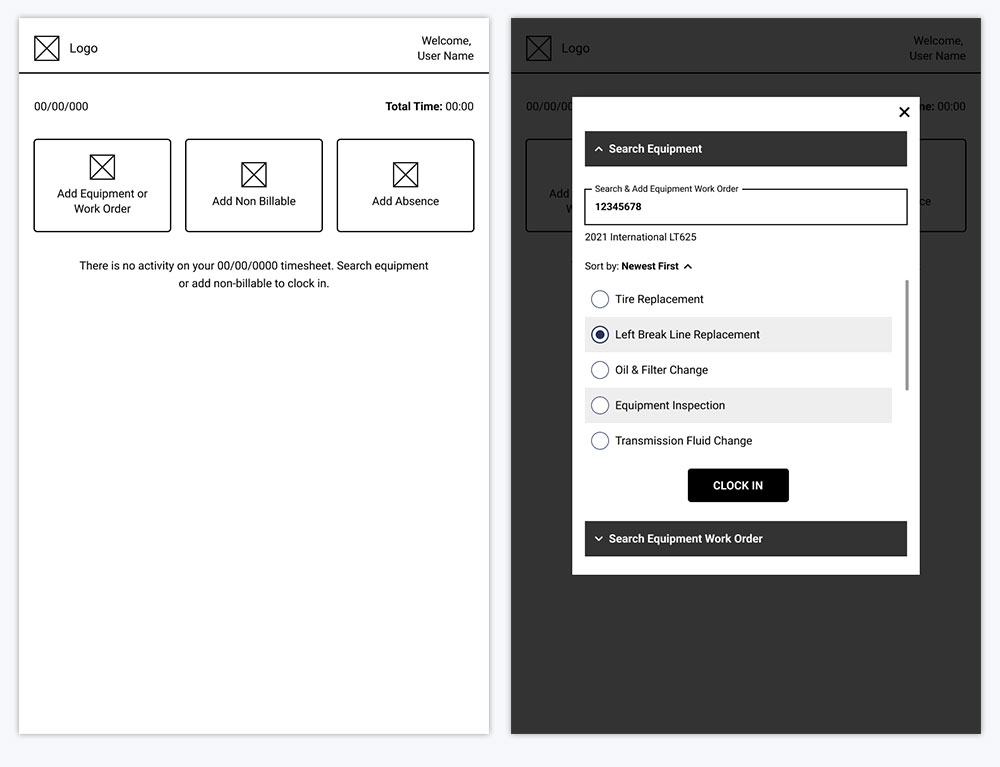
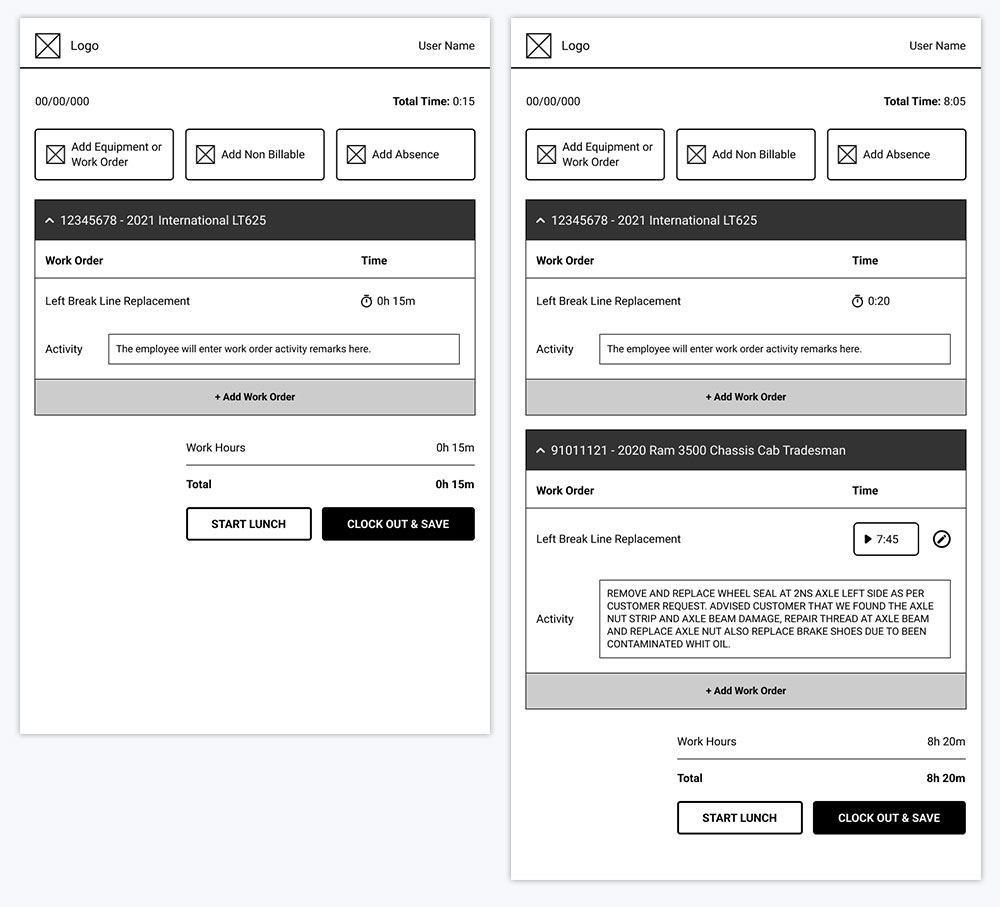
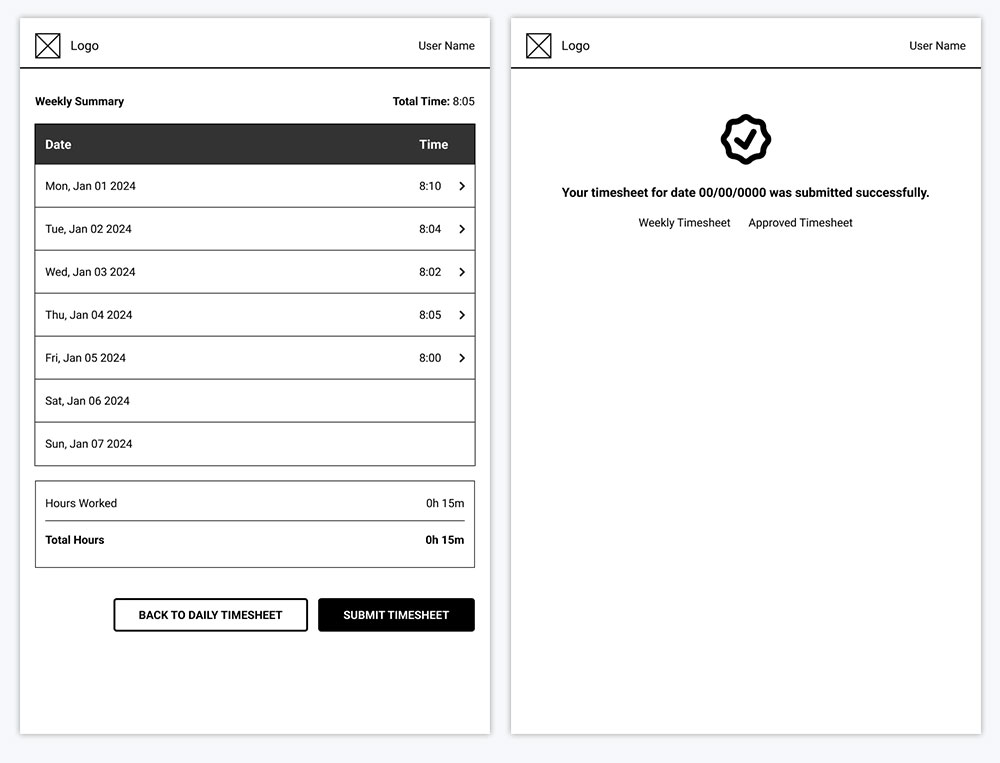
After obtaining all of the essential criteria and laying out the current state process mapping, I begin by considering making improvements to the current process. Along with the process, I also suggested using iPads which were already available in Shop. I produced a basic wireframe idea in which the mechanic may search for equipment numbers, examine all released work orders made by managers, and add time to each work order separately.
Wireframes
The Result
There were initial challenges concerning the activity type for the timesheet; however, after additional discussions and negotiations, it was determined that the activity type did not provide significant value to users and was subsequently excluded from the requirements.
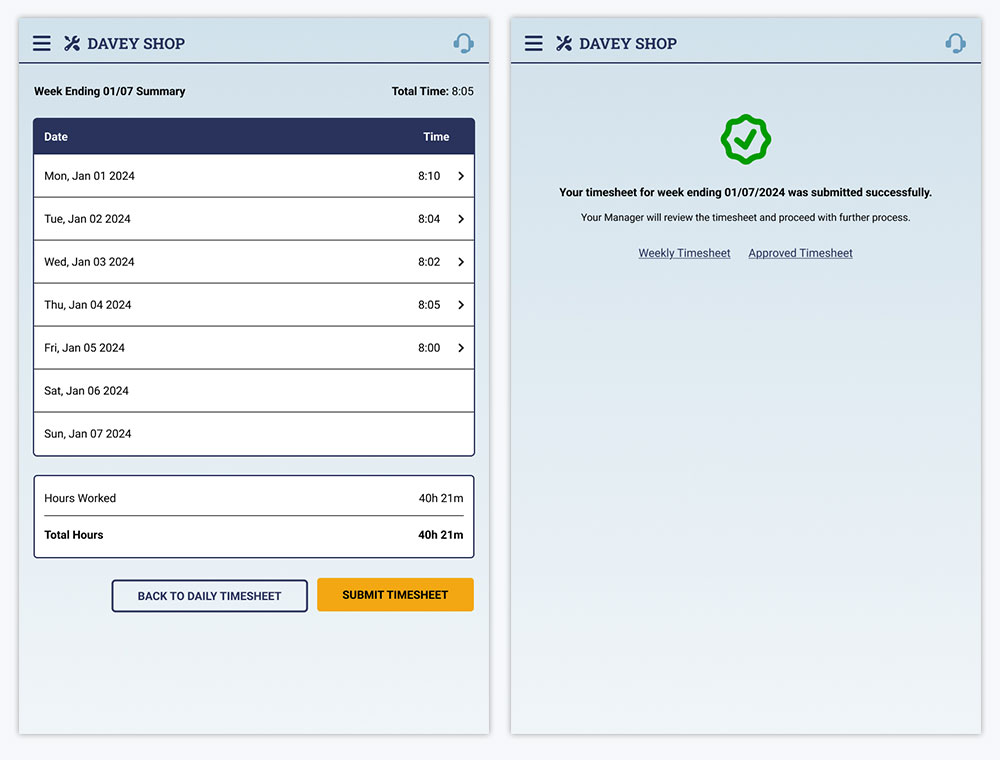
The newly designed application received high praise, and the objective of effectively tracking employee time on each piece of equipment by work order was achieved successfully. The precise time tracking proved beneficial for paying employees down to the minute. Managers appreciated the new application primarily because it eliminated the need for manual time entry labor, streamlined the approval process for employee time, facilitated payroll processing, and ensured accurate billing of hours to clients.
New Time Application